
Hospitality Heals
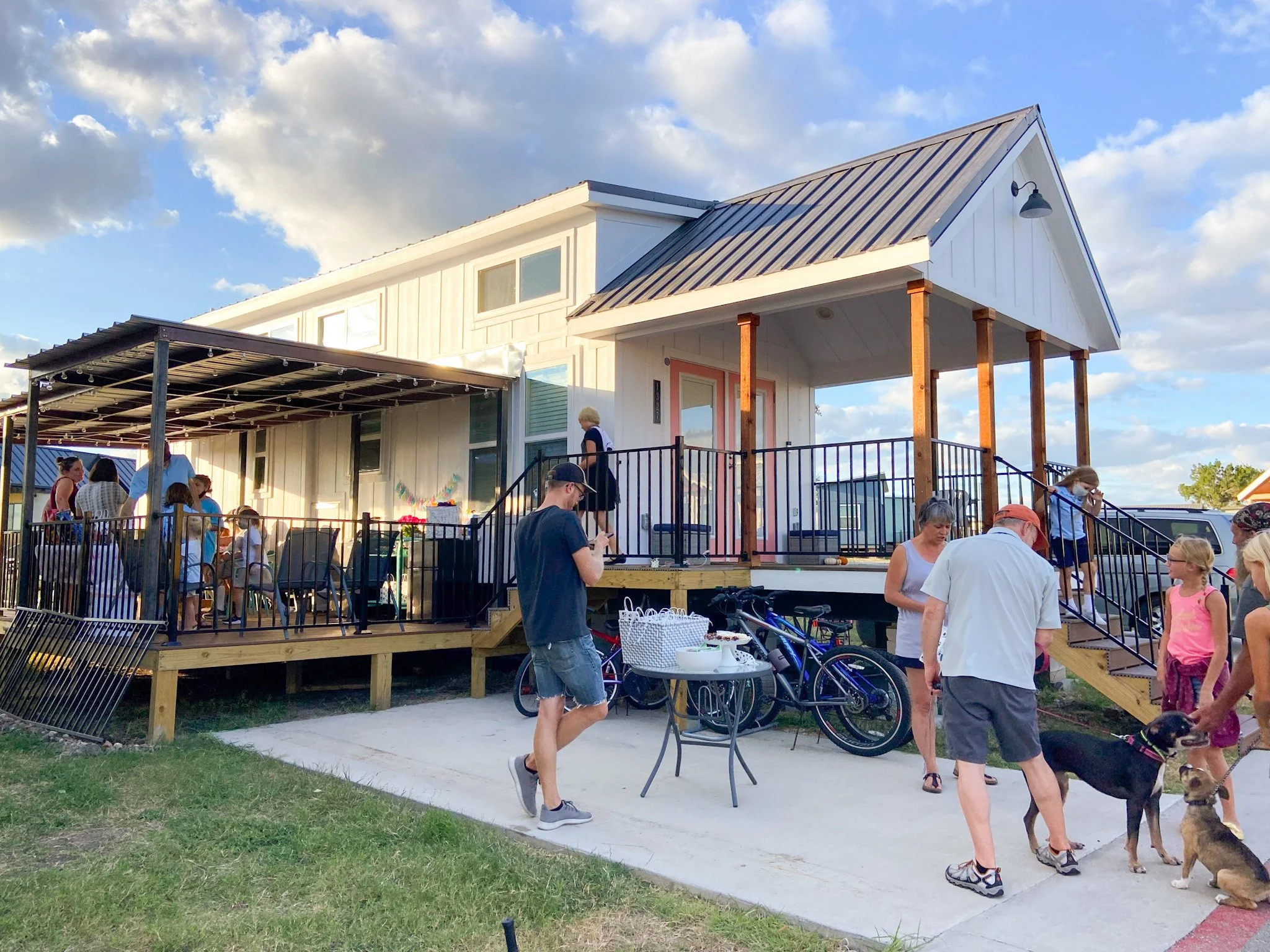
Dustin and I have loved hosting since the beginning of our relationship. My apartment was the place we hung out in college and grad school, gathering our group of friends multiple times a week for taco night or staying up until the wee hours of the morning playing cards.
When we got married, our place in Tulsa became a gathering spot for weekly small groups and church events, and, in Peoria, a place for more of the same, now with the fun addition of pool parties. We loved welcoming people and doing our best to create an environment that felt genuine and comfortable.
So, in 2020, when we planned to move into a MUCH smaller space, we weren’t exactly sure how the practicalities of our love for hospitality would play out.
Of course, we knew a tiny barrier like only having 399 sq feet couldn’t really keep something as powerful as hospitality from happening.
Belonging can be built wherever people gather. Lives can intertwine authentically over store-bought chips or beautifully curated cuisine. Understanding and vulnerability, tears and laughter, can all be shared in the smallest of spaces.
We watched that happen in real time in our smallest home yet.
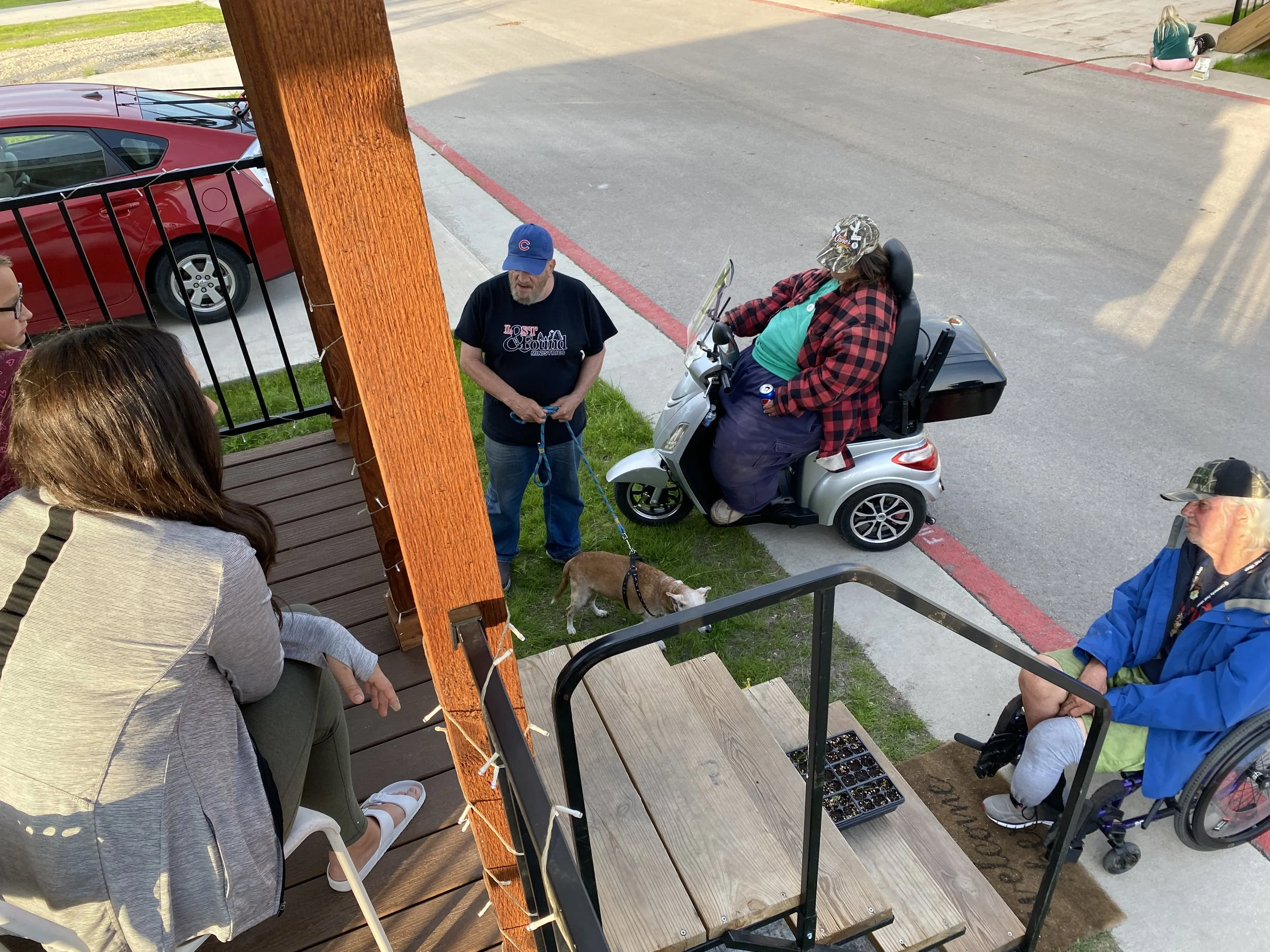
Recently, we came across a photo from our first year in the village, when COVID was still raging and social distancing was still practiced. There our family sat, on the edge of our porch. Some neighbors had started to congregate at the bottom of our front steps. One with a dog on a leash. Two in their wheelchairs. I remember that moment vividly, thinking about how special it was to live in a place where people were craving connection.
In the coming months, as things began to open up and we’d met most of the neighbors on the property at the time (just around 200), we started to figure out the rhythms of the neighborhood.
We’d make sure to be outside at certain common times of day, when folks would water their plants or take their dogs for their last nightly laps. Neighbors would ask the girls questions about their stuffed animals’ names or their silly sidewalk chalk drawings.
We got creative — chatting with people for hours on our front porch, our steps, in our tiny side yard, and even inside our little living room.
And then, when we invested in our side deck, which nearly doubled our home’s square footage, it became a sacred space.
We got plenty of seating, a comfortable porch swing, and we refinished our handmade table that Dustin and his dad had built, so it could serve as an anchor point for one-on-one conversations or larger gatherings.
And we started hosting weekly happy hours, inviting our nearest neighbors to join us on Tuesday afternoons to share sweet and salty snacks and a drink or two.
It was there that we got to know our first friends on our street: Ron & Darlene, Klaus, Nuria, Lettie, Sabrina & Jason, John, and anyone else who would walk by and slow their stroll, clearly wondering if the space was open to them too.
It was.
We shared stories of what brought us to the village and checked in on what everyone was spending their time on — artwork, woodworking, and gardening projects in progress. We talked about the neighborhood dogs, the weather, our hopes and dreams.
Those weekly check-ins were a momentum builder toward exactly what we wanted to establish - our deck wasn’t just for us. We built it for the community to have a space to gather. We wanted folks to come up the back ramp or the front stairs and start chatting without being asked. We wanted them to swing by when they finished their morning landscaping shift or make a stop while they were heading to the mailbox.
And it worked.
Our home, though the smallest we’ll likely ever live in, was so often brimming with people.
And I hope it’s because we did our best to create a safe space.
All of us, but especially those of us who have experienced trauma, are looking for places where we can feel safe and settled. Our brains can all too often stay in survival mode, assessing the surroundings, looking for danger, operating in fight-or-flight. In that mode, our world gets smaller. We tighten. We brace. We do what we need to do to get through.
But connection, safe connection, sends a different signal. A warm welcome, a steady presence, a gentle tone, someone genuinely glad you’ve arrived. Those cues can help the nervous system soften. They widen the world again. And that widening is often where healing begins.
When our friend, Broderick, wanted to cook breakfast for the neighbors, we were excited to equip him with the ingredients, helpers, and space to do so right from our deck. Friday after Friday, the sizzling bacon wafted through the neighborhood as friends gathered at nearby tables waiting for their morning feast. And there stood Broderick, behind the Blackstone grill, grinning from ear to ear, grateful for the chance to bring people together.
And when we had the opportunity to oversee the weekly on-site evening church service, week after week, our friend Mr. Charles took pride in pouring coffee. He’d serve everyone their requested amount of cream and sugar, firmly but gently reminding some neighbors not to have thirds until everyone had had their first cup. I think it was his way of welcoming. His way of saying, you’re expected here. You’re included. You belong.
Hospitality can, and does, happen anywhere. Because at its best, hospitality seems to completely reorient us. It shifts the focus — from where we are to who we are with and how they make us feel.
Hospitality gently nudges us toward the softest parts of our humanity, listening and lingering, connection and care.
Hospitality sometimes includes opening where we live.
But hospitality always includes opening our lives.
A beautiful place with delicious drinks and the perfect playlist can be lovely.
But a rhythm of caring conversations with empathetic energy can be lasting.
Hospitality heals because we are made for this type of connection, and our bodies know when we’ve found it.
Hospitality heals because we all just want a place to belong, and we’ll keep returning to those familiar places and those familiar people where we’re accepted and loved just as we are.
So we’ll keep practicing it.
In our apartment, which we now call home.
When we visit the village and we find a shared space to connect with our friends.
When we travel to other places where A Faithful Presence can be cultivated.
We’ll keep offering ourselves. We’ll keep welcoming others. And we’ll keep creating a safe place to belong.